
The Nepal police have arrested a man suspected of having links with the Mumbai triple bomb blasts that killed 24 people on July 13. State-run Gorkhapatra daily reported on Tuesday that a 40-year-old man, Mohamad Zahid, was arrested on Monday from Baluwatar on the outskirts of Kathmandu. He was being questioned by the anti-terrorist police unit, the daily said. Zahid, a resident of Sarlahi district of southern Nepal bordering India, was allegedly involved in the blasts.
Nepal Maoist chief Prachanda sought to allay India's concerns that his party was strongly anti-Indian, but underlined that the two countries need to redefine the 'unequal' accords of the past given the dramatic changes of the past few years. On the second say of her three-day visit, Indian Foreign Secretary Nirupama Rao met the Maoist chairman who also told her that his party was committed to honour the agreements signed in line with the peace process in Nepal.
A Nepalese Parliamentary committee has asked the government not to send officers to India for training after Maoists feared that they might be 'brainwashed' during their stay in the country. The International Relations and Human Rights Committee of the Parliament on Tuesday asked the foreign ministry not to send the foreign service cadres to India for the 10-day training programme. India's external affairs ministry has agreed to provide training to the Nepalese officials.
A luncheon hosted by the Indian envoy to Nepal to celebrate New Year offered an opportunity to the country's warring political leaders to discuss their differences over the election of a new prime minister.Indian Ambassador to Nepal Rakesh Sood invited top politicians to the embassy for a lunch on Sunday where the leaders, during an informal meeting, expressed their diverse views on the current political deadlock.The gathering took place ahead of winter session of parliament.
India plotting our downfall, say Nepalese Maoists
Nepal's lawmakers on Monday rejected Maoist chief Prachanda and his NC rival Ram Chandra Poudyal for the fifth time in the Prime Ministerial elections, plunging the country into a deeper political crisis in the absence of a government.
A 16-year-old Delhi school boy on Saturday had a brief tryst with destiny, equaling the world record of being the youngest to step atop the world's highest peak, only to have his feat overturned hours later by a 13-year-old American. Arjun Bajpayee, became the youngest Indian to climb the 8,848 metre Mount Everest early today morning via the traditional South Col route in Nepal. He equaled the record of Nepalese boy, Sherpa Temba Tsheri, who also climbed the peak.
Indian Army chief General Deepak Kapoor met his Nepalese counterpart on Tuesday, as he began a crucial four-day trip, amid protests by hundreds of Maoists at the Indian Embassy in Kathmandu. The police arrested over a dozen Maoist cadres who attempted to wave black flags at the Tribhuvan International Airport, said the police.
Nepal Maoist supremo Prachanda on Tuesday blamed India's 'naked interference' for the lingering political crisis in Nepal, as the former rebels served an ultimatum to the embattled government to resolve the deadlock by January 24 or face an indefinite general strike.

As the Maoists paralysed normal life in Nepal for the second day in running, the government beefed up security on Monday amid warning by a top former rebel leader that they may declare a new constitution from the streets.
Waving red flags, 5000 militant cadres forced their way into the Durbar Square city centre where their chief Prachanda declared Kathmandu valley as the Newa Autonomous State.
"It is wrong to link us with the Indian Maoist movement, he said. There is no involvement (of Nepalese Maoists) in the Indian Maoists' movement," the party's senior leader, Baburam Bhattarai, told media-persons.
India and Nepal on Friday launched their crucial two-day home secretary-level talks in Kathmandu. The two sides are expected to ink an extradition treaty and formulate a border security and management strategy. Home Secretary G K Pillai, who arrived in Kathmandu on Thursday evening, commenced the bilateral security meeting with his Nepalese counterpart Govinda Kusum and is likely to seek tough action against those carrying out anti-India activities from this country.

Bollywood star Manisha Koirala has made a high-profile visit to the memorial of her grandfather B P Koirala, the first elected Prime Minister of Nepal, fuelling speculation that the Nepali beauty was set to join politics.
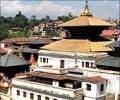
A group of Maoists on Friday severely thrashed two Indian priests and tore their clothes and sacred thread at Nepal's famous Pashupatinath temple, marking a violent turn to the agitation over their recent appointment. Some 40-50 Maoists, posing as devotees, entered the fifth century Hindu shrine at around 1330 hrs and dragged out the priests -- Girish Bhatta and Raghavendra Bhatta, both aged 32,officials said.
On the eve of his maiden official visit to New Delhi, Premier Madhav Kumar Nepal affirmed on Monday that his country would not allow its soil to be used against India and sought the giant neighbour's cooperation in the fields of infrastructure development and power generation.
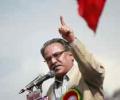
Maoist chief Prachanda has alleged that India and the United States had planned to launch an anti-China campaign, even a possible attack on the Communist giant, using Nepalese territory. "The US-India plan had to face challenges from our party and that triggered the conspiracy against my government," Prachanda, who quit following a rift with his coalition partners over his controversial decision to sack the army chief, said at a training programme of the Maoists in Kathmandu.
Nepal attaches 'great importance' to its relations with India which are based on mutual respect, goodwill, understanding and cooperation, Prime Minister Madhav Kumar Nepal has said.
Nepal on Friday sought India's co-operation in moving the peace process forward, giving indications ahead of Foreign Secretary Shivshankar Menon's visit that it was looking forward to closer bilateral ties.
Nepal's coalition cabinet headed by Prime Minister Madhav Kumar Nepal has scrapped the erstwhile Maoists-led government's controversial decision to remove the army chief Geneeral Rookmangud Katawal. The cabinet in its meeting on Thursday nullified the Maoists-led government's decision.
